

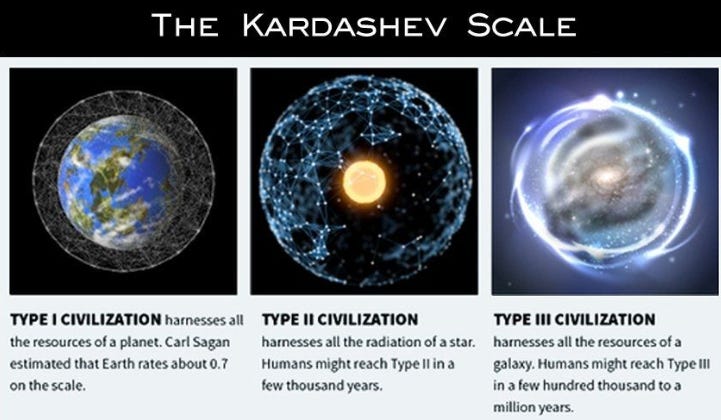
Elon Musk recently invoked the Kardashev Scale, sparking a conversation about an undeniable reality: AI Data Centers are devouring energy at an exponential rate.
Historically, we viewed this problem through the lens of conservation. We worried about efficiency. But the math is becoming unforgiving. Analysis from the SRC’s Decadal Plan for Semiconductors suggests a grim timeline: by approximately 2040, global computing demand will outstrip the entire world’s energy supply.
We are sprinting toward an invisible but solid “Energy Wall.” Without radical breakthroughs, the exponential growth of AI could hit a hard ceiling as early as 2030.
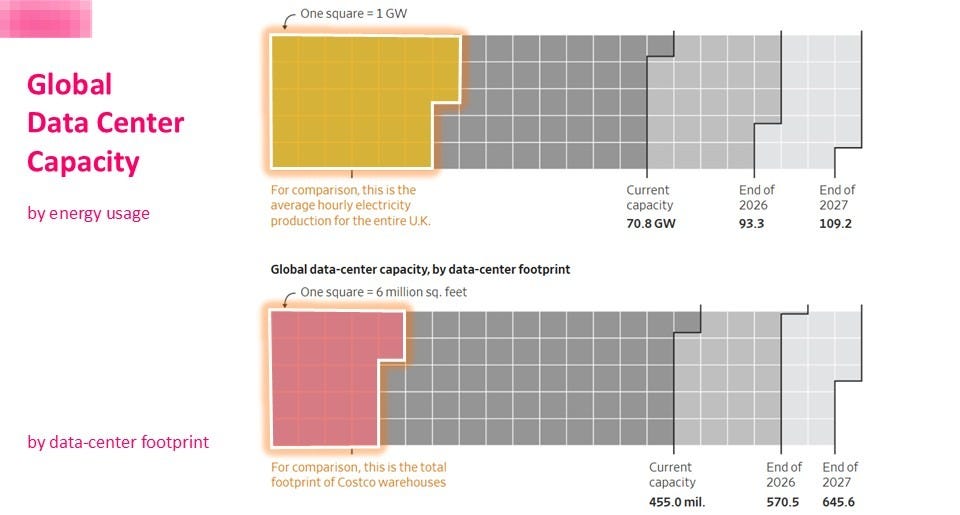
Source:The Wall Street Journal, WSJ
But what if the solution isn’t to use less, but to access more? What if the solution is to move the infrastructure off-planet entirely?
It sounds like science fiction, but it is actually a conclusion rooted in hard physics that dates back to 1960.
1. Not Sci-Fi, But Science (Princeton, 1960)
To understand why we are now talking about launching servers into orbit, we must travel back to June 1960.
While the world was obsessed with the Space Race, Freeman Dyson, a legendary physicist at the Institute for Advanced Study in Princeton, published a short but profound paper in the prestigious journal Science.
The paper was titled “Search for Artificial Stellar Sources of Infrared Radiation.”
At the time, astronomers were struggling with how to find extraterrestrial civilizations. Most were focused on “listening” for radio waves (like in the movie Contact). Dyson proposed a completely different perspective: Don’t listen for what they say; look for what they consume.
Dyson’s logic boiled down to three core concepts:
A. The “Exponential Growth” is Irreversible: Dyson noted that any industrial civilization (humans included) experiences “Malthusian growth.” Simply put, a civilization’s appetite for energy grows exponentially. Eventually, planetary resources (fossil fuels, nuclear, or surface solar) hit a hard limit.
B. The Only Exit is the Star: The Earth intercepts only about one two-billionth of the Sun’s total energy. The rest flows uselessly into deep space. Dyson deduced that an advanced civilization must eventually build a structure to intercept and collect that lost energy.
C. The Infrared Signature (Waste Heat): This was his brilliant insight into thermodynamics. Energy used is not destroyed; it is converted into heat. If a civilization wraps a star to generate electricity, that heat must be radiated away to prevent the structure from melting. Therefore, an advanced civilization wouldn’t look like a bright star—it would look like a dark object glowing intensely in Infrared.
2. Debunking the Myth: It’s Not a “Sphere”
Pop culture (like Star Trek) often depicts a Dyson Sphere as a solid, hollow metal shell completely enclosing a star.
This is a misunderstanding. Dyson himself later clarified that a solid shell is mechanically impossible; gravity would tear it apart.
The scientifically accurate concept is a “Dyson Swarm.” Imagine a swarm of mosquitoes surrounding a streetlamp. It involves billions of independent satellites, solar mirrors, and space stations orbiting the sun in a dense formation. They form a loose but massive network to harvest energy.
3. The Convergence: Why We Are Building the “First Lego Brick” Today
Back to 2025. Why are we dusting off a 60-year-old physics paper? Because AI has driven us right into the “Energy Wall” Dyson predicted.
The concept of Space-Based Data Centers proposed by today’s tech industry is essentially the micro-implementation of a Dyson Swarm. Here is why the physics and economics finally make sense:
Unlimited Solar Power (Concept B): Instead of waiting for that tiny fraction of sunlight to filter through Earth’s atmosphere, we can place data centers in Sun-Synchronous Orbits (SSO) or on the Moon’s “Peaks of Eternal Light.” There, solar panels receive pure, unfiltered energy 24/7.
Radiative Cooling (Concept C): The “waste heat” problem Dyson identified has a natural solution in space. The background temperature of the universe is 2.7 Kelvin (-270°C). Projects like the EU’s ASCEND and startups like Lumen Orbit are validating how to dump heat directly into this deep freeze, eliminating the need for the massive water-cooling systems used on Earth.
In-Situ Consumption: There is no need to beam electricity back to Earth (which is inefficient). We use the power right where it is gathered to run the compute, and then beam only the processed data back.
Plummeting Launch Costs: Thanks to SpaceX (Falcon 9 and Starship) and Blue Origin, the cost to put heavy hardware into orbit is crashing down, making this economically viable.
Satellites as Servers: Future constellations like Starlink or Kuiper won’t just be communication relays; they will be orbital compute nodes.
Further Reading & Deep Dives
To prove that sending data centers into orbit is not just a pipe dream, here are three key references from government, academia, and the private sector that form the theoretical bedrock of “Space-Based Computing.”
1. The Definitive Official Study: The EU ASCEND Project
Funded by the European Commission, this massive study aimed to verify whether orbital data centers could be a solution for achieving net-zero emissions.
Project Title: ASCEND (Advanced Space Cloud for European Net zero emission and Data sovereignty)
Lead Agency: Thales Alenia Space (on behalf of the European Commission)
Key Conclusions:
Technical Feasibility: The report confirms that utilizing space’s “unlimited solar energy” and “extreme cold environment” effectively solves the two biggest pain points of terrestrial data centers: power consumption and heat dissipation.
Environmental Threshold: The report honestly notes that to be environmentally viable, we need to develop new launch systems that are 10x greener than current rockets (aligning with the goals of Starship regarding full reusability and fuel efficiency).
2. Academic Architecture Analysis: Cost Models & Cooling
This paper provides a detailed examination of the economic models for Space-Based Data Centers (SBDC), specifically quantifying the trade-offs between latency and cost.
Paper Title: Space-Based Data Centres: A Paradigm for Data Processing and Scientific Investigations
Publication: A. A. Periola & M. O. Kolawole (2019, IEEE Access)
Core Insights:
The Cost Trade-off: While launch costs remain high, SBDCs offer massive savings on expensive terrestrial land and increasingly scarce cooling water resources.
Best Use Case: The architecture is described as perfect for “Non-Real-Time AI Training”, where high bandwidth is needed but millisecond latency is not critical.
3. Industry Whitepaper: The Business Case for AI Training
This is the most relevant document regarding the current startup ecosystem and Elon Musk’s perspective, offering a concrete path to commercialization.
Whitepaper: Why we should train AI in space
Publisher: Lumen Orbit (now Starcloud) — A Y Combinator-backed startup.
Core Arguments:
Energy Arbitrage: Solar panels in space are 5-8x more efficient than on Earth due to the lack of atmospheric interference and the absence of night (in specific orbits).
Ultimate Passive Cooling: Leveraging the Stefan-Boltzmann Law, heat can be radiated into the 2.7K (-270°C) background of deep space with near-zero energy consumption.
Strategic Positioning: The paper proposes a specific business model: focusing exclusively on AI Model Training rather than Inference, cleverly sidestepping the physical limitations of communication latency.
Conclusion
By moving AI compute to space to harvest solar energy directly, we are effectively placing the first “Lego brick” of a Dyson Sphere.
AI, once thought to be limited by Earth’s energy constraints, might be the very catalyst that pushes humanity out of the cradle. We are watching science fiction become engineering reality, one orbital server rack at a time.
Note: The Kardashev Scale
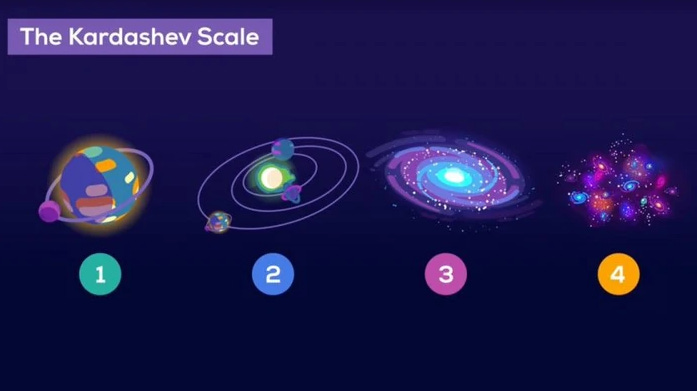
The Kardashev Scale was introduced in 1964 by Soviet astronomer Nikolai Kardashev. He posited that as a technological civilization advances, its energy consumption grows exponentially. He classified civilizations into three levels:
Type I (Planetary): A civilization that can utilize all the energy available on its home planet (Earth).
Type II (Stellar): A civilization capable of harnessing the total energy output of its star (the Sun)—i.e., by building a Dyson Swarm.
Type III (Galactic): A civilization that can control the energy of its entire galaxy (the Milky Way).
At our current technological level, humanity has not yet reached Type I status. We are currently estimated to be at approximately Type 0.7.
Source:
https://all-fiction-battles.fandom.com/wiki/The_Kardashev_Scale
https://fermatslibrary.com/s/search-for-artificial-stellar-sources-of-infrared-radiation